 Search
 Login
LoginKnife Skills for Indian Cooking: Cutting Techniques That Save Time
 9 min
9 min 10/12/2025


Quick Summary
If you've ever spent hours in the kitchen prepping vegetables for a simple dish, you know that chopping can take longer than the actual cooking. But here's where it gets better – you can master a few basic knife techniques specifically for Indian vegetables that can cut your prep time in half. These aren't complicated chef-school methods. They're practical, everyday techniques that Indian home cooks have been using for generations to get dinner on the table faster.
Deep Dive
Desi cooking relies heavily on fresh vegetables, and how you cut them affects both cooking time and final taste. Uniform cuts ensure even cooking, which means that vegetables like potatoes won’t get mushy on the outside but hard in the centre. When vegetables are cut into even sizes, they cook at the same rate, absorb spices evenly, and look much more appetising on the plate. Beyond that, certain dishes call for specific cuts. Thin onion slices caramelise quickly for a rich curry base, while chunky potato cubes hold their shape in a dry sabzi. Learning these cuts will save you time, make cooking efficient, and make your life easier.
The Basic Tools
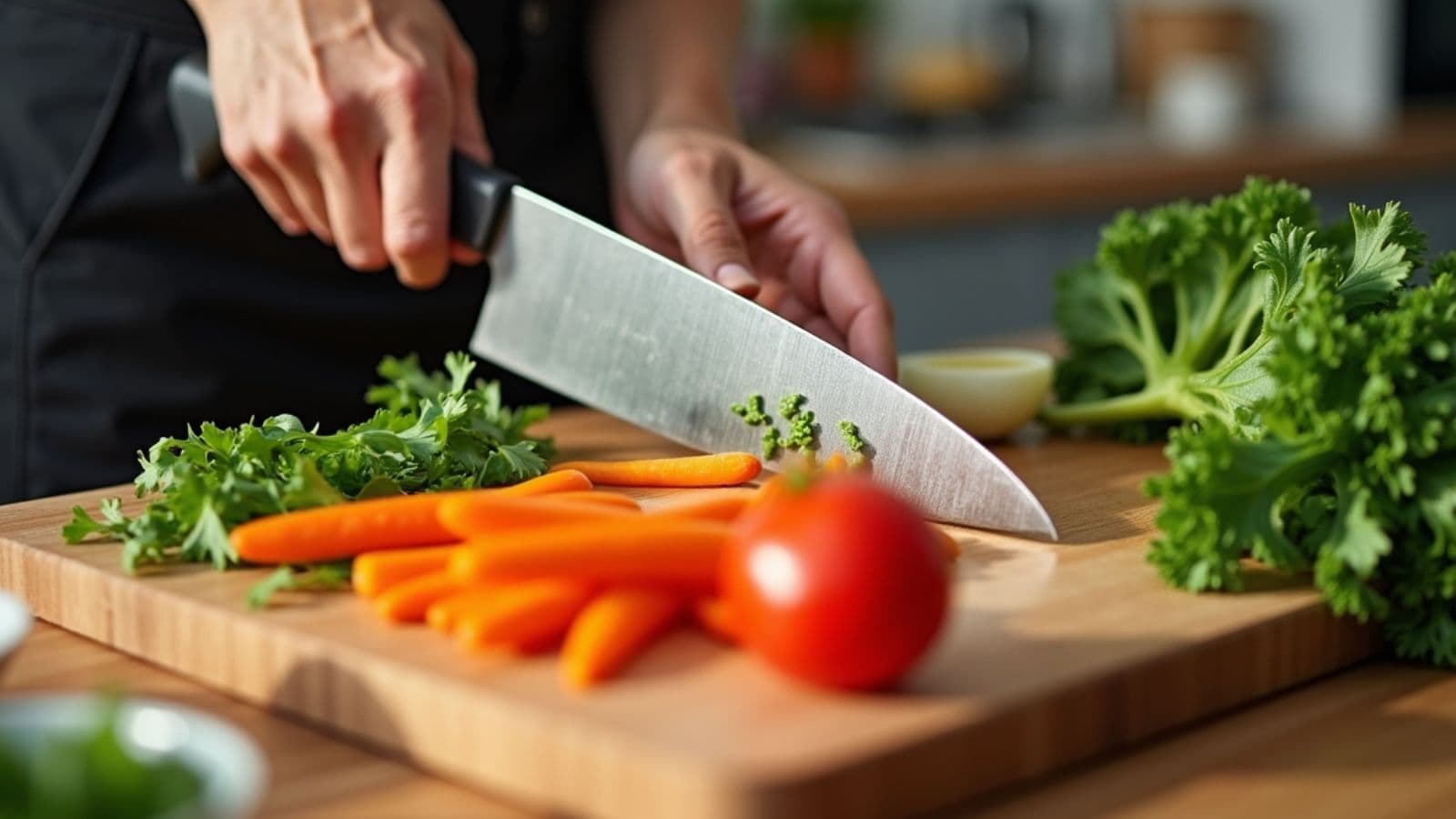
Before diving into cutting techniques, here’s a lowdown about what you actually need. You don't need a drawer full of fancy knives. A good, sharp chef's knife about 8 inches long will handle most of your work. A sharp knife cuts faster and more safely than a dull one because it slices through vegetables cleanly without requiring you to apply excessive pressure that can cause the knife to slip.
Your cutting board matters too. Place a damp cloth under your cutting board to prevent it from slipping when using it. This simple step gives you a stable surface and prevents accidents. Wooden cutting boards are gentler on your knife edge than plastic ones, though both work fine. Just make sure whatever board you use is large enough to work comfortably without vegetables rolling off the sides.

Onions
Let’s start with onions, because they're in practically every Indian dish you'll ever make. The way you cut onions determines how quickly they brown and how they affect the flavour of the dish.
Gravy-Style
For most curries, you want finely chopped onions that will cook down into the gravy. Here's how to do it quickly and efficiently:
Start by cutting off the top of the onion, but leave the root end intact. This root holds the layers together and makes cutting much easier.
Cut the onion in half from top to root, then peel off the papery skin.
Place one half flat-side down on your board.
Make several vertical cuts from the top toward the root, but stop just before you reach the root end. Think of it like slicing the onion, but you're not going all the way through.
Then make one or two horizontal cuts parallel to your cutting board.
Finally, slice across the onion perpendicular to your first cuts, and you'll have perfectly uniform pieces that all fall apart at once.
The root kept everything together while you worked, and now you can discard it.
Stir Fry- Style
For dishes like biryanis or stir-fries where you want onion slices rather than chopped pieces, the method is even simpler. Cut your peeled onion in half, place it flat-side down, and slice from one end to the other, keeping your cuts as even as possible. Use your knuckles to guide the knife and curl your fingertips back away from the blade. This is the standard safe cutting technique that prevents you from accidentally cutting yourself.
The Onion Type
Indian cooking typically uses red onions, so ideally stick to those, especially for dishes like biryani and rich gravies like paneer butter masala. Then there are the yellow onions, which have less water content than white ones. It means they brown faster and develop deeper flavours, which is also good for Indian cooking.
Tomatoes
Tomatoes can be frustrating to cut because they're so juicy. The trick is using the right technique to keep things tidy. For chopping tomatoes used in curries, cut them in half horizontally first, which gives you a stable, flat surface. Place each half cut-side down on your board. This simple step prevents juice and seeds from going everywhere as you work.
Now slice the tomato half into strips, then turn and chop those strips into small pieces. The cut surface stays against the board the whole time, keeping the mess contained. For a smoother gravy, many cooks prefer to roughly chop tomatoes and then blend them after cooking, which breaks down the skins. Fresh tomatoes are always best for cooking because they have the right balance of flavour.

Potatoes
Potatoes show up in Indian cooking more than almost any other vegetable, starring in everything, from simple dry sabzis like aloo gobi to rich curries like dum aloo. Cut potatoes into bite-sized pieces, typically around half-inch to three-quarter-inch cubes. If you cut them smaller, they'll fall apart and turn mushy in your curry. If you cut them larger, they'll take forever to cook.
Here's the method: Wash your potatoes well, but you don't necessarily need to peel them for every dish. For many North Indian dishes, the skin stays on. Cut each potato in half, then place it flat-side down. Cut each half into thick slices, then stack a few slices and cut them into strips, and finally cut across to make cubes. For stir-fried dishes, you can also cut potatoes into thick sticks, about half an inch wide.

Bottle Gourd and Other Gourds
Wash the gourd thoroughly, then peel off all the skin using a vegetable peeler. Cut off both ends. Now cut the gourd in half lengthwise. If you see large seeds inside, scoop them out with a spoon. Cut each half into slices about half an inch thick, then cut those slices into half-inch cubes. Don't go smaller because the bottle gourd has a high water content and will break down as it cooks.
Here's the critical safety tip: before cooking bottle gourd, always taste a tiny piece raw. If it tastes bitter, throw the entire gourd away immediately. Bitter bottle gourd contains toxic compounds that can affect your health. The same basic cubing technique works for other gourds and squashes used in Indian cooking, like ridge gourd, snake gourd, or ash gourd. Adjust the size of your cubes based on how long the vegetable takes to cook.
Putting It All Together
Good knife skills aren't about speed for the sake of speed. They're about working efficiently, so you spend less time on prep and more time enjoying your food. Start by mastering the basics: onions, tomatoes, and potatoes. These three vegetables appear in the majority of Indian dishes, so getting comfortable with cutting them will immediately make your cooking faster.