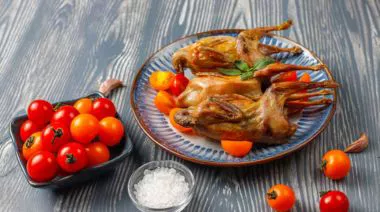
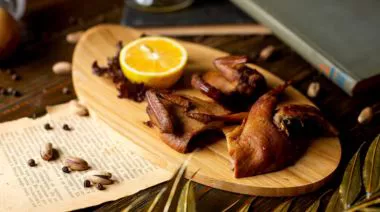
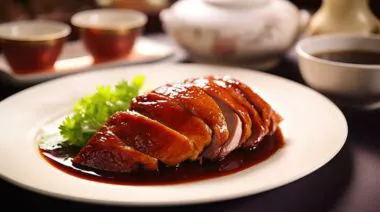
This festive duck roast blends the richness of slow-roasted duck with bright citrus notes, aromatic garlic, and warming winter spices. The skin turns beautifully crisp while the meat stays tender and flavourful. The citrus-spice pan juices form a luxurious gravy, making it an elegant centrepiece perfect for Christmas feasts and winter gatherings.
Ingredients
UNITSIngredients
1Whole duck (2–2.2 kg)
2Oranges (halved)
1Lemons (halved)
1 whole bulbGarlic (halved horizontally)
2Onions (quartered)
6–8 sprigsFresh thyme
2–3 sprigsFresh rosemary
1Cinnamon stick
2Star anise
3–4Cloves
2Bay leaves
2 tbspOlive oil
to tasteSalt
to tasteBlack pepper
2 tbspHoney
¼ cupOrange juice
1 tbspButter (optional, for basting)
Follow
Directions
Description - Step 1
Step 1: Prep the Duck
Pat the duck dry with paper towels to remove any moisture from the skin, this ensures crispness. Trim excess fat from the cavity and neck area. Use a sharp skewer to prick the skin all over, especially around the thighs and breast, being careful not to pierce the meat. This helps the fat render slowly and evenly during roasting, giving the skin a delightful crackle.
Description - Step 2
Step 2: Season Generously
Rub the duck with olive oil, salt and black pepper, making sure to coat it evenly. Place the halved oranges, lemon, garlic bulb, thyme and rosemary into the cavity. These aromatics steam gently inside the bird, keeping the meat moist and releasing festive scents of citrus and herbs as it roasts.
Description - Step 3
Step 3: Arrange the Roasting Tray
Place the quartered onions in a roasting tray to form a natural bed for the duck. Add cinnamon, star anise, cloves and bay leaves around the tray. As the duck cooks, these spices infuse the rendered fat, creating the base for a flavourful pan gravy with warm winter notes. Place the duck breast-side up on top of the onions.
Description - Step 4
Step 4: Slow Roast for Crisp Skin & Tender Meat
Roast the duck at 170°C for 1.5–2 hours. Every 30 minutes, carefully spoon out excess fat into a heatproof bowl. Duck fat is excellent for roasting potatoes later. Rotating the tray halfway ensures even browning. The low, steady heat allows the meat to become tender while the skin turns increasingly crisp.
Description - Step 5
Step 5: Prepare the Citrus-Honey Glaze
Whisk together honey and orange juice in a small bowl. Warm it slightly to make it easier to brush. The glaze adds a golden shine and a gentle sweetness that balances the duck's richness. It also enhances caramelisation during the final roasting stage.
Description - Step 6
Step 6: Finish with a High-Heat Roast
Increase the oven temperature to 200°C. Brush the duck with the citrus-honey glaze and roast for another 15–20 minutes. This final blast gives the skin a lacquered, festive sheen and deepens the aroma of spices. Baste once more if needed for extra gloss.
Description - Step 7
Step 7: Let the Duck Rest
Remove the duck from the oven and allow it to rest for at least 10 minutes. Resting helps the juices settle back into the meat, ensuring moist slices. During this time, remove aromatics from the cavity and prepare the pan juices for gravy.
Description - Step 8
Step 8: Make the Winter Spice Gravy
Place the roasting tray over low heat. Mash the softened onions and garlic into the rendered fat and spices. Add a splash of water or stock to loosen. Simmer until the mixture thickens into a rich, fragrant gravy. Strain for a smoother finish or serve rustic-style with all the bits.
 Search
 Login
Login European
 Intermediate
 Main Course