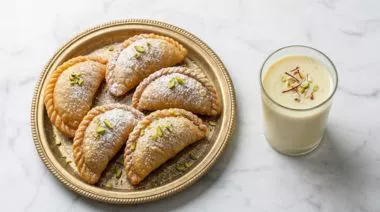
Pineapple Gujiya brings a seasonal twist to the traditional Holi sweet that is usually filled with khoya and dry fruits. The addition of fresh pineapple gives a gentle tang that balances the richness of mawa and coconut. Gujiya has roots in North Indian festive cooking, especially during Holi, when families prepare large batches to share with guests. This variation keeps the flaky outer shell intact while introducing a bright fruit filling that feels lighter yet celebratory.
Combine refined flour and salt in a wide bowl. Add melted ghee and rub it into the flour using your fingertips until the mixture feels sandy and holds shape when pressed. This stage determines the flakiness of the shell. Gradually pour water and knead into a firm dough. Avoid making it soft. Cover with a damp cloth and let it rest for 20 minutes to relax the gluten.
Description - Step 2
Step 2: Cook Filling
Place finely chopped pineapple in a heavy-bottomed pan and add sugar. Cook on medium heat as the fruit releases its juice. Stir continuously so the mixture does not stick. Once most of the moisture has evaporated and the mixture has thickened, add grated coconut, khoya, and cardamom powder. Cook briefly until slightly dry. Add cashews, almonds and raisins. Cool completely before shaping.
Description - Step 3
Step 3: Shape Gujiyas
Divide the rested dough into equal portions and roll each into a 4-inch disc. Place one tablespoon of cooled filling at the centre. Lightly apply water along the edges, fold into a half-moon and press firmly to seal. Twist or crimp the edges carefully so they remain sealed while frying. Keep the gujiyas covered to prevent drying.
Description - Step 4
Step 4: Fry Slowly
Heat ghee or oil in a deep pan over medium flame, then reduce to low before frying. Slide in 3–4 gujiyas gently without overcrowding. Fry on low heat, turning occasionally, until evenly golden brown. Slow frying ensures the outer crust cooks through and becomes crisp without blistering. Remove and drain on kitchen paper. Cool before storing.