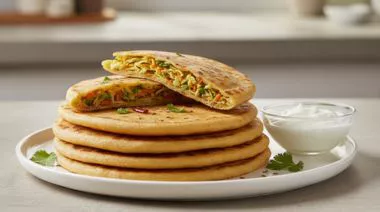
Cabbage & Carrot Slaw Paratha brings finely shredded vegetables directly into the dough, creating a paratha that cooks evenly without stuffing. Using Aashirvaad Shudh Chakki Atta, made from selected whole wheat grains and ground with modern chakki technology, helps the dough absorb moisture gradually. This matters when working with cabbage, which naturally releases water during resting and cooking. The four-stage milling process of the atta supports better hydration, allowing the parathas to stay soft inside while developing light surface browning on the tawa.
Add cabbage and carrot to a bowl and sprinkle a small pinch of salt. Mix gently and rest for five minutes. Lightly squeeze to remove excess water without drying the vegetables. This step keeps the dough firm and prevents steaming during cooking.
Description - Step 2
Dry Mixing
Place Aashirvaad Shudh Chakki Atta in a wide bowl. Add cumin seeds, red chilli powder, turmeric, green chilli, ginger, coriander, and remaining salt. Mix evenly so spices distribute before moisture is added.
Description - Step 3
Dough Formation
Add the prepared cabbage and carrot mixture to the flour. Sprinkle water gradually and knead into a soft dough. The atta’s moisture-retaining quality helps absorb vegetable moisture evenly. Add 1 tableof spoon oil and knead briefsmoothoothen.
Description - Step 4
Resting Phase
Cover the dough and allow it to rest. This resting time lets whole wheat fibres hydrate fully and stabilises the vegetable moisture. The dough becomes easier to roll and less prone to tearing.
Description - Step 5
Rolling
Divide the dough into equal portions. Dust lightly with dry atta and roll each portion into a 6–7 inch circle. Keep pressure even to avoid thin edges and thick centres.
Description - Step 6
Tawa Cooking
Heat a tawa on medium heat and place the rolled paratha on it. Cook until bubbles appear, flip, and apply oil. Flip again and cook until golden spots form. Adjust the heat to avoid over-drying.
 Search
 Login
Login Indian
 Easy
Easy Main Course




 Instagram
 Facebook
 Youtube