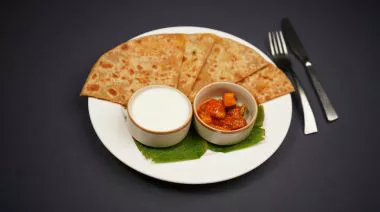
There is something special about a spicy pickle on the table — it instantly sets the vibe for good flavours. And with this Rajasthani aam ka achaar recipe, you can make a tangy, spicy pickle at home, ensuring every meal has a touch of boldness. Made from raw mangoes, the pickle works as a condiment for simple roti-sabzi lunches or hearty parathas at breakfast. And it even works as a surprise, flavourful layer for quick-fix sandwiches.
The Rajasthani mango pickle is more pungent and spicier than other regional pickles, with a distinctive flavour thanks to the addition of fennel seeds. Other pickles may also use less oil, or vinegar, or even have a mild sweetness, especially in the version available in North India. Traditional Rajasthani aam ka achaar recipe, on the other hand, has a balanced ratio of fenugreek-nigella seeds with turmeric-salt. This recipe also relies on raw mango because it has a firm texture that resists mushiness and develops a vibrant, tangy taste when paired with oil and spices. It also has high acidity and tart flavour, that make it an ideal preservative.
Another thing to keep in mind when making pickles at home is storage – pickles have a long shelf life, generally. The Rajasthan aam ka achaar recipe also uses mustard oil and spices as natural preservatives. Thus, if stored properly (in a clean and dry glass jar or ceramic container, placed in a cool, dry and dark place), the pickle can last for 12 months, or even longer.
Thoroughly wash the raw mangoes under running water. Wipe them dry, and cut into small pieces. Spread the pieces on a kitchen towel to dry them completely. It can take anywhere between 3-4 hours for them to dry.
Description - Step 2
Prepare the masala and oil
Add mustard seeds, fennel seeds, fenugreek seeds and nigella seeds to a blender. Blend into a coarse powder, not fine. Set aside. Now, heat mustard oil in a pan on medium heat. Once it fumes, turn off the heat. Let it cool completely.
Description - Step 3
Mix the ingredients
Take a medium or large bowl. Add the raw mango pieces and coarsely ground masala, along with salt, chilli powder and turmeric to the bowl and mix well, ensuring the pieces are evenly coated. Now, add the coated pieces to a clean, dry glass jar.
Description - Step 4
Preserving the pickle
Pour the cooled oil from the top. Cover the mouth of the jar with a muslin cloth. Keep the jar under direct sunlight for 3-4 days. This dries out excess moisture and accelerates natural fermentation. Keep jar covered loosely (not fully open) to avoid dust and stir/shake once daily for even coating.
Description - Step 5
Store the pickle
After 3-4 days, the mango pieces should have softened and turned a paler yellow colour (instead of their initial vibrant green or light green shade). Now, close the lids and store the pickles in a dark and dry place for up to a year. Make sure the oil fully covers the mango pieces at all times. Also, use a fresh spoon every time to prevent contamination and spoilage.
Rajasthani aam ka achaar can last up to a year when stored in a clean, dry jar with enough oil covering the mango pieces to prevent spoilage.
Mustard oil acts as a natural preservative and adds a sharp, pungent flavour that enhances the taste and shelf life of traditional Rajasthani mango pickle.
Yes, sun-drying helps remove excess moisture, improves flavour development, and aids natural preservation, making the achaar more stable for long-term storage.
Pickle spoilage usually happens due to moisture, insufficient oil, or using a wet spoon. Always keep ingredients dry and ensure the pickle is fully submerged in oil.
 Search
 Login
Login Indian
 Easy
Easy Appetizer






 Instagram
 Facebook
 Youtube